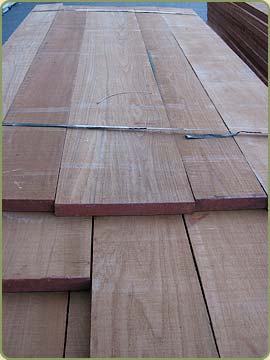
Teak is an amazing wood. Although here in the U.S, is not used for structural applications, its strength values are similar to our native Oaks. Teak seasons well, is rated as very durable in respect to decay and insect resistance, and is somewhat hard to finish with oils and paints. The Teak heartwood varies from a yellow-brown to a deep brown with streaks of dark color. It is amazingly stable with a very low shrinkage factor.
Although teak comes originally from countries in the West Indian Ocean, but there’s been development of plantations in South America and Africa.
Janka side hardness: 1,000 to 1,155 lb for dry material. Forest Products Laboratory toughness: 116 in.-lb average for green and dry wood (5/8-in. specimen). Specific Gravity (oven dry): 0.55 Durability: Heartwood is rated as very durable with respect to decay fungi and termites; not immune to marine borers. Finishing: Heartwood extremely resistant to preservative treatments, sapwood also of low permeability. Workability: Easily worked with both hand and machine tools and dresses to a very smooth finish if tools are kept sharp; glues moderately well despite its oily nature. Blunting of cutters can be rather severe. As noted, may cause dermatitis on some individuals.
Teak Raw Lumber Photo Album
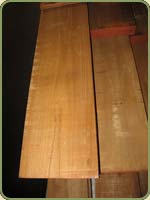
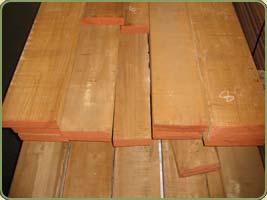
The following pictures are samples of some products we have shipped recently, please note that pictures depicting more that one piece of lumber may have been a mixed grade shipment.
Please email us to request pictures or wood samples.
Slabs
Slabs of teak can be crafted into a variety of lumber products.